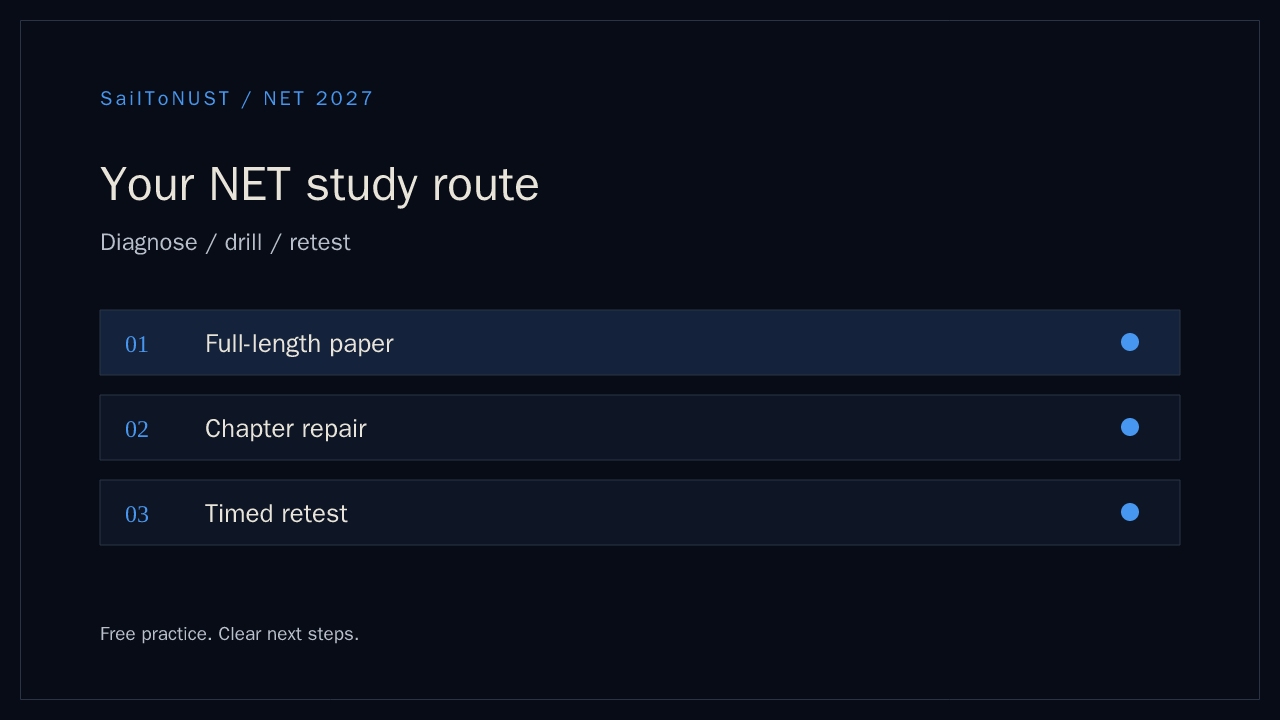
Prepare for the NUST entry test by diagnosing your gaps, repairing weak chapters and retesting under exam conditions. SailToNUST gives Engineering candidates a free route through full-length papers, chapter drills, past MCQs and CBNET rehearsal; other papers can use the relevant subject tools with a matching mock elsewhere.
Start by confirming your paper in the syllabus guide. A timetable built around the wrong subject mix wastes study sessions before you even open a question. If you are new to the exam, read what NUST NET is first.
Key facts
- NET has 200 MCQs in 180 minutes with no negative marking.
- Engineering weights Mathematics 50%, Physics 30% and English 20%.
- SailToNUST has 9,760 chapter MCQs, 2,927 recalled past MCQs and six Engineering FLPs.
- The route below is a suggested study method. It does not promise a score or admission.
Source: SailToNUST repository and NET facts, reviewed November 2026; NUST source record verified August 2026
1. Diagnose with an unused full-length paper
Take one Engineering FLP under its timer. Work without notes, outside help or a paused clock. The point is to find your starting level, so an uncomfortable score still gives useful information.
Record your score and what happened before you read the solutions. Which sections felt slow? Did you leave questions because you did not know the method, or because earlier work consumed the time? Note uncertain correct answers too. A successful guess can hide the same knowledge gap as a wrong answer.
Business and Applied Sciences applicants should use a mock matching their paper. SailToNUST's full papers cover Engineering. The Business platform comparison and Applied Sciences comparison identify matching alternatives and explain how to combine them with our drills.
2. Convert the result into a chapter queue
Keep an error log outside the site. A notebook or spreadsheet is enough. Record the chapter, the cause, the correction and what you will try next. Do not copy whole solutions; write the step you missed.
| What happened | What to record | Next study action |
|---|---|---|
| You did not know how to begin | Missing concept or relationship | Revisit the textbook, then drill the chapter |
| You knew the method but calculated wrongly | Exact algebra, arithmetic or unit error | Solve fresh examples with written working |
| You misread a condition | The word or restriction you skipped | Practise identifying conditions before solving |
| You ran out of time | Questions where time disappeared | Add timed work after repairing the method |
| You guessed correctly | Why your reasoning was incomplete | Review it like an error |
Choose the next chapter from this evidence. For Engineering, Mathematics has the largest weight, but your own error pattern still matters. Repeating comfortable maths while ignoring a broken Physics topic can leave avoidable marks untouched.
3. Drill chapters until the method transfers
Open chapter practice and choose one item from the queue. If integration caused repeated misses, use integration, rather than hoping another mixed paper gives you enough integration questions.
Attempt the question before reading the explanation. Identify where your approach diverged. Close the explanation and solve again from scratch, then try a different question that tests the same idea. Return later without the solution visible. That delayed check distinguishes understanding from short-term recognition.
If you still cannot explain the method, reread the relevant textbook section or ask a teacher. SailToNUST provides written solutions, not video lessons or live tutoring. More guessing does not replace the explanation you need.
Use the subject guides when the chapter queue feels too broad: Mathematics, Physics and English. They help organise revision around the paper rather than the order of a random question bundle.
4. Add past MCQs after concept repair
Use past MCQs to apply the repaired method to recalled exam-style wording. Select the relevant subject and read the paper labels. Older Engineering recalls can include subjects outside the present paper, so do not let the archive decide your current revision weights.
These are candidate recalls, not official released NUST papers. Wording can be incomplete and answers can need checking. If a key conflicts with your working, solve it independently and consult the underlying rule. The past-paper explanation covers those limits.
Do not turn recall practice into a bet that the same questions will appear. Explain the concept behind each answer so you can solve a changed version.
5. Rehearse the CBNET controls
Use the simulator after learning the underlying questions. Practise choosing an option, saving it and moving on. Learn when review becomes available and how sequential navigation changes your return plan.
One clock covers the test. The overall average is 54 seconds per question, derived from 180 minutes and 200 MCQs. That is a budgeting reference, not an instruction to stop every question at 54 seconds. Some need less time and others need more. The pacing guide explains how to manage that difference.
PBNET candidates should practise recording answers on a separate sheet. Use the format comparison to prepare for the mode you will sit. An online simulator does not rehearse answer-sheet transfer.
6. Retest, compare and repeat
Take an unused matching full paper after a period of chapter repair. Compare repeated error types and unfinished work alongside the score. If the score rose because you recognised old answers, you still need unfamiliar questions to check transfer.
Keep the next cycle narrow enough to finish: choose the chapters behind the largest recurring losses, repair them and retest. Do not exhaust all six Engineering papers in a rush. The mock-test planning guide explains how to balance sittings with review.
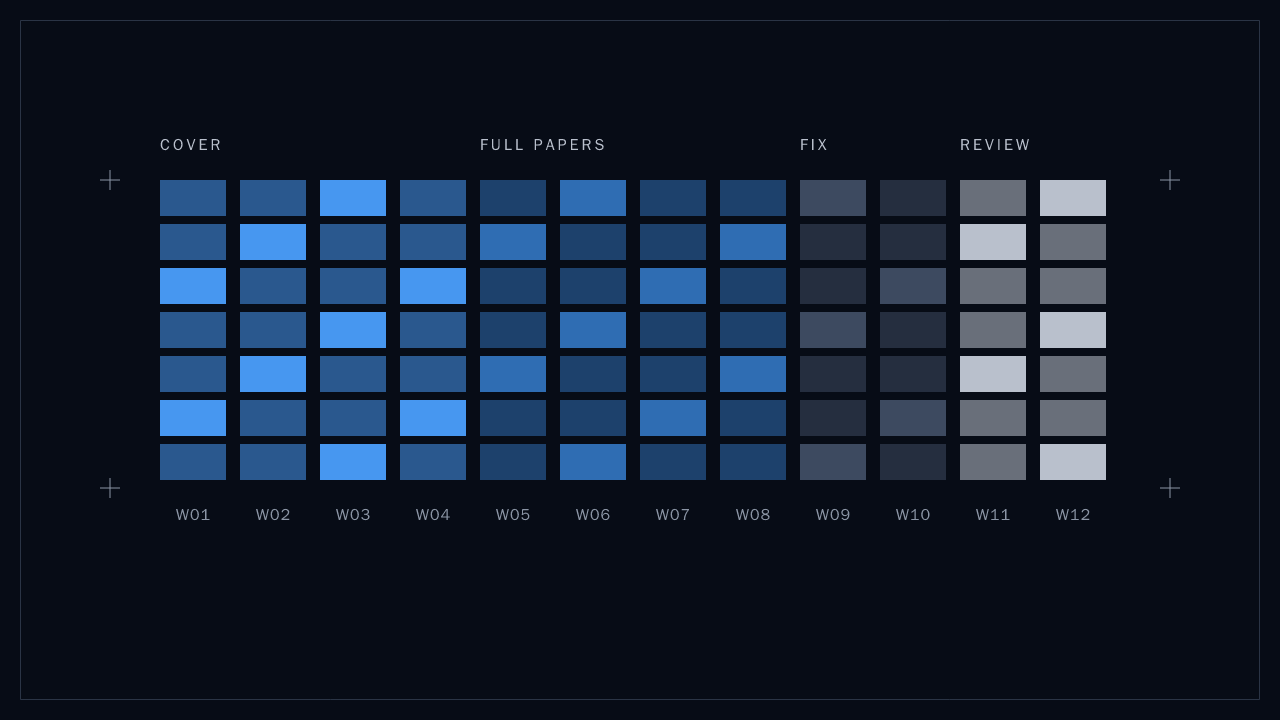
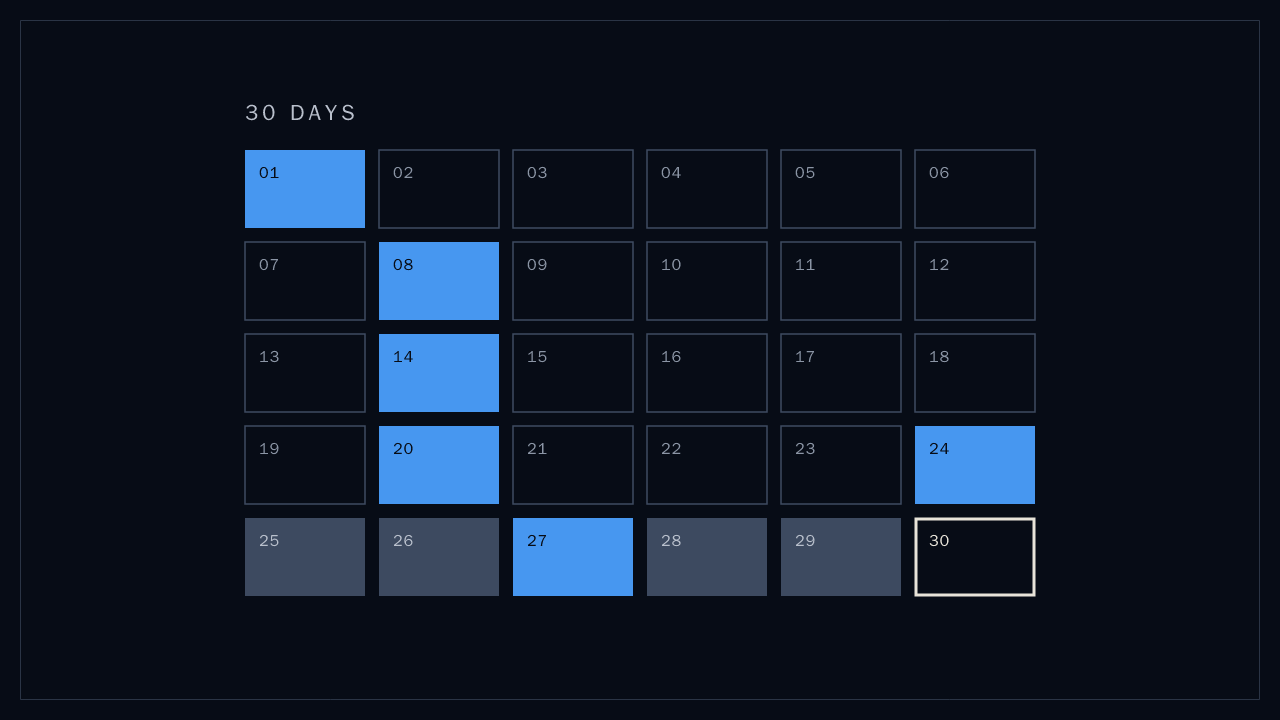
Choose a calendar around that cycle. Use the 30-day plan or three-month plan according to the time you have. Check NET dates separately; a study plan does not reserve a sitting. Near the exam, use the test-day checklist so paperwork and travel do not undo the preparation.