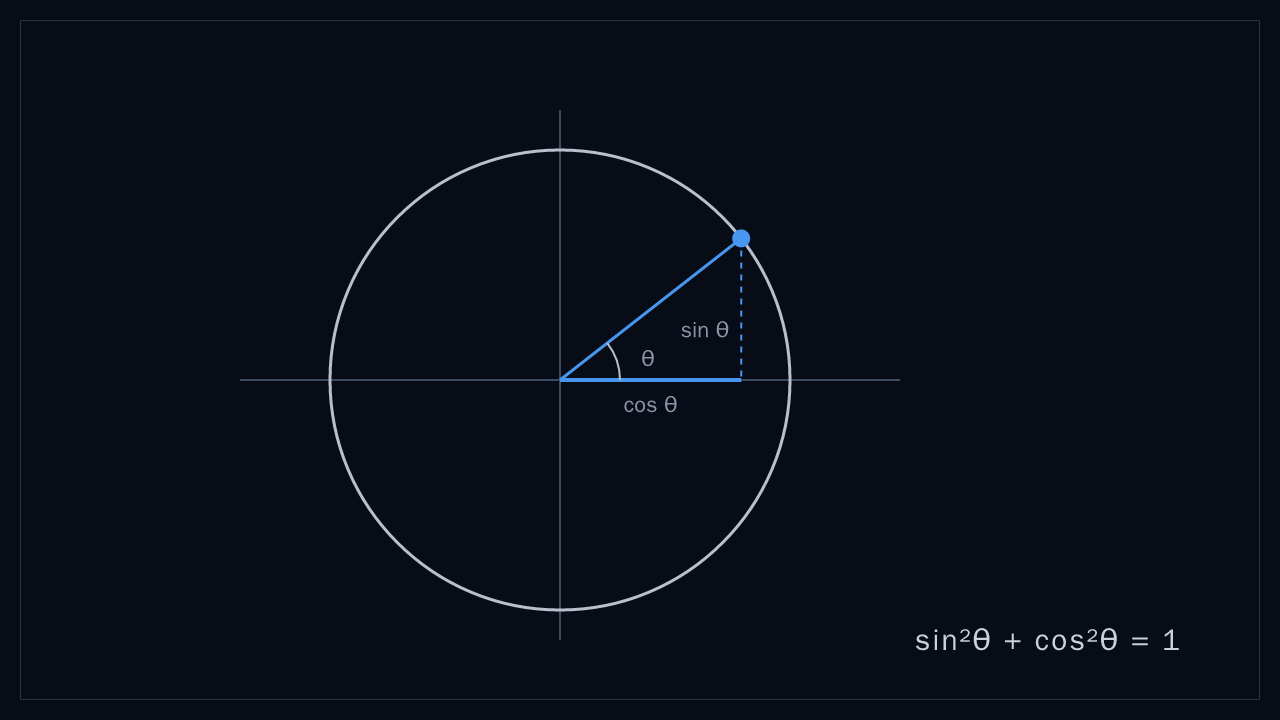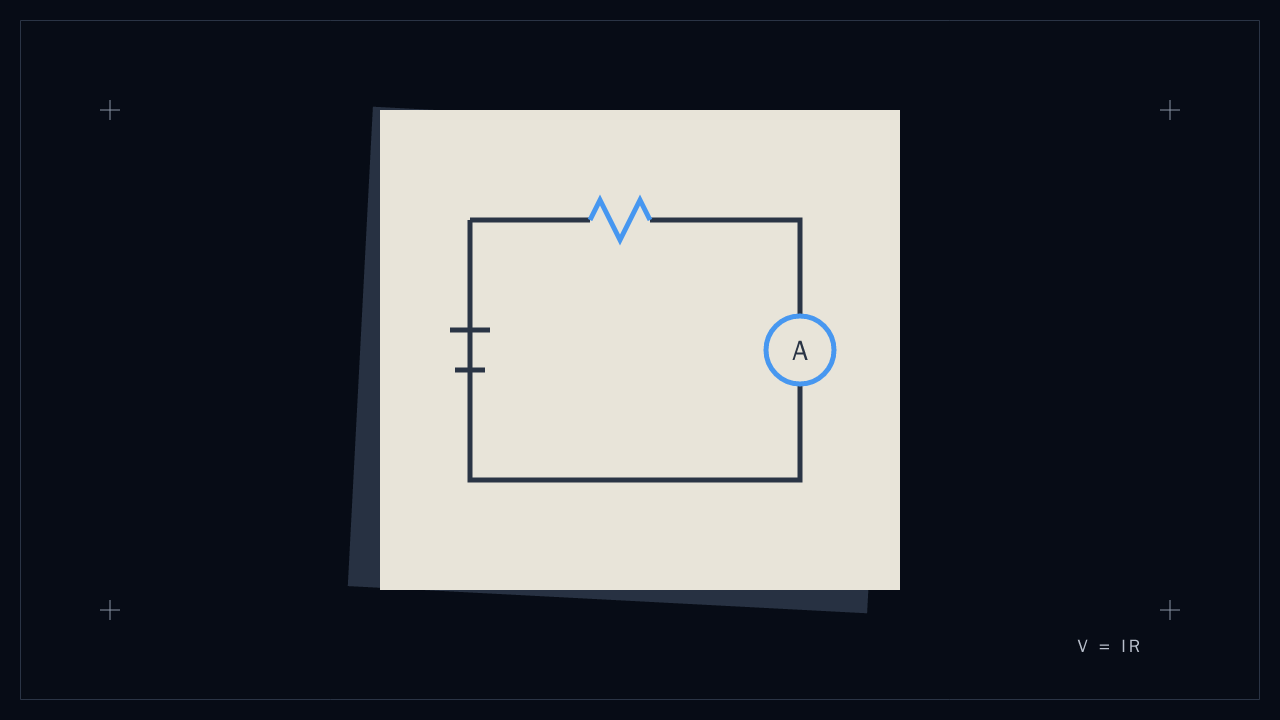
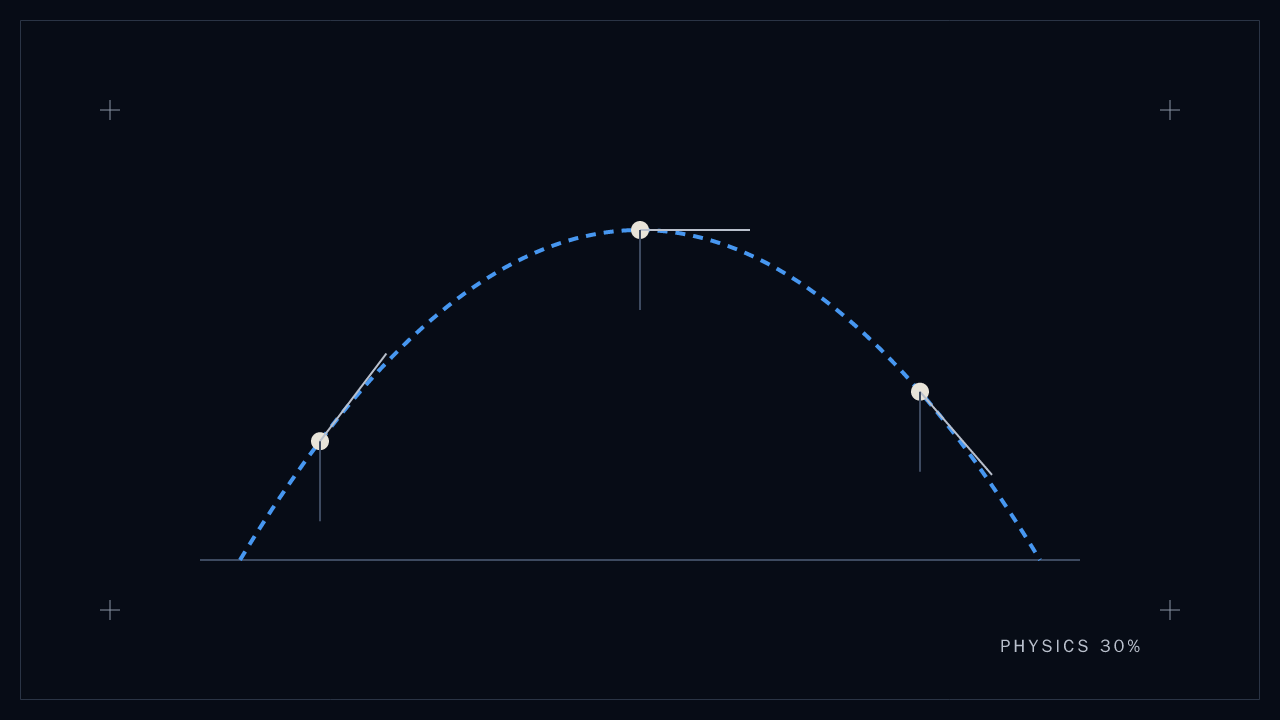
Physics is 30% of NET-Engineering, which works out to about 60 of the 200 questions. Most of those marks come from mechanics and electricity, and most physics MCQs reward ratio reasoning and a few memorised constants more than long calculation.
Key facts
- Physics is 30% of NET-Engineering and does not appear on any other NET paper
- NUST publishes percentages only. 60 physics questions is derived from the 200-MCQ total
- The whole paper is 200 MCQs in 180 minutes, with no negative marking
- Our bank has 2,643 physics MCQs across 14 chapters
Source: NUST, Subjects included in NET with weightings, checked October 2026. Bank counts from the SailToNUST question bank.
What the physics section covers
The syllabus follows HSSC Part-I and Part-II physics. Our syllabus page lists 21 chapters, 12 from first year and 9 from second year. Fourteen have MCQs in our bank today. The rest, such as medical physics and space and environment, are newer National Curriculum chapters still being added.
Physics shares its 180 minutes with maths and English on the same paper. If maths takes 100 minutes, physics gets roughly 50 for 60 questions. That is under a minute each, so you cannot afford to set up every problem from scratch.
Which chapters to do first
This order is our own judgement from the syllabus. NUST does not publish chapter weights. The MCQ column shows how much practice our bank has for each chapter, which is a guide to where you can drill, not a prediction of the exam.
| Priority | Chapter | MCQs in our bank |
|---|---|---|
| 1 | Measurements | 130 |
| 1 | Force and motion | 282 |
| 1 | Work, energy and power | 162 |
| 1 | Circular and rotational motion | 154 |
| 1 | Electrostatics and current electricity | 362 |
| 1 | Electromagnetism | 260 |
| 2 | Waves and vibrations | 279 |
| 2 | Quantum physics | 242 |
| 2 | Solids and fluid dynamics | 241 |
| 2 | Alternating current | 135 |
| 2 | Nuclear and particle physics | 133 |
| 3 | Heat and thermodynamics | 130 |
| 3 | Physical optics and gravitational waves | 115 |
| 3 | Special theory of relativity | 18 |
Measurements sits at the top even though it is short. Dimensional analysis is the fastest way to kill wrong options in every other chapter, so learn it in week one.
Mechanics and electricity come next because they are the two largest blocks of the syllabus and the formulas carry over. Energy conservation solves questions in circular motion, fluids and waves. Coulomb-style inverse-square reasoning shows up again in gravitation.
Modern physics (quantum and nuclear) is priority 2 because a lot of it is recall: ground-state energy of hydrogen, what 1 u is worth in MeV, which angle gives the largest Compton shift. A few evenings of flashcards cover much of it.
The question shapes you will see
Ratio questions. "The charges are doubled and the distance is halved. The force becomes?" Coulomb's force goes as q₁q₂ ÷ r², so the numerator goes up 4 times and the denominator drops 4 times. The answer is 16F. Never plug in numbers for these.
One-formula numericals with tidy numbers. "A bulb is marked 60 W, 120 V. Its resistance is?" R = V² ÷ P = 14,400 ÷ 60 = 240 Ω. The numbers are chosen to work out cleanly, so a messy answer usually means a wrong formula.
Conceptual one-liners. "Where is the pressure highest in a flowing fluid?" Where the speed is lowest, by Bernoulli. "Fringe spacing in a double-slit experiment is proportional to?" The wavelength.
Dimension questions. "The dimensions of the coefficient of viscosity are?" From F = ηA(dv/dx), η has dimensions ML⁻¹T⁻¹.
Graph and figure items. Kinetic energy against time for SHM, P-V diagrams, circuit figures. Read the axes before the curve.
Speed tactics for physics
Reason in ratios. Water at 3 m/s in a 4 cm pipe enters a 2 cm pipe. The area falls by a factor of 4, so the speed rises by 4: 12 m/s. The same move answers "the current is multiplied by 100, the energy in the inductor becomes?" Energy goes as I², so 10,000 times.
Take g as 10 m/s² unless the question says otherwise, and look for "about" in the stem. "A ball dropped from a tower lands in 4 s. The height is about?" ½ × 10 × 16 = 80 m.
Check units before you check arithmetic. If an option has the wrong dimensions, it is wrong no matter what the numbers are. This often removes two options in five seconds.
Memorise a short constants list. e = 1.6 × 10⁻¹⁹ C, h = 6.63 × 10⁻³⁴ J s, c = 3 × 10⁸ m/s, k = 9 × 10⁹ N m² C⁻², hydrogen ground state = −13.6 eV, 1 u ≈ 931 MeV. Our physics formula sheet has the rest, by chapter.
Do not reread long stems. Many physics stems carry a story. Underline the given values and the asked quantity in your head on the first read, then work from those.
How to practise physics for NET
Learn a chapter from your textbook first. MCQ drilling before you understand the idea teaches you to recognise questions, not to solve them. Then do 40 to 60 bank MCQs per chapter, untimed, and read the working on every miss.
Once mechanics and electricity are done, switch to mixed sets. NET does not tell you which chapter a question is from, and recognising the chapter is half the work.
In the last six weeks, sit a full-length paper each week. Track physics time separately. If physics keeps eating into your English minutes, the fix is usually more ratio drilling, not more theory. The three-month plan shows where physics chapters fit week by week.
FAQ
How many physics questions are in NET Engineering?
NUST gives physics a 30% weighting. On a 200-MCQ paper that is about 60 questions. The count is derived, since NUST publishes percentages only.
Is chemistry in NET Engineering?
No. NET-Engineering is mathematics, physics and English. Chemistry is tested on NET-Applied Sciences.
Which physics chapters are most important for NET?
Start with measurements, mechanics (force and motion, work and energy, circular motion) and electricity (electrostatics, current, electromagnetism). NUST does not publish chapter weights, so treat this as a study order, not an exam forecast.
Is NET physics conceptual or numerical?
Both. Many numericals need one formula and tidy numbers, and many conceptual items test a single idea. Ratio reasoning answers a large share of both kinds quickly.