NUST NET is the National University of Sciences and Technology's undergraduate entry test. Candidates sit the paper required for their programme and qualification; the standard format has 200 MCQs in 180 minutes with no negative marking.
NET is separate from your board examinations. It contributes to the admission aggregate, so learning the paper and testing your current level should come before choosing a study timetable. This is the starting explanation; the linked guides cover registration, eligibility and preparation in more detail.
Key facts
- NET has five paper categories with different subject weights.
- NUST runs four series a year. Check the announced schedule for centres and dates.
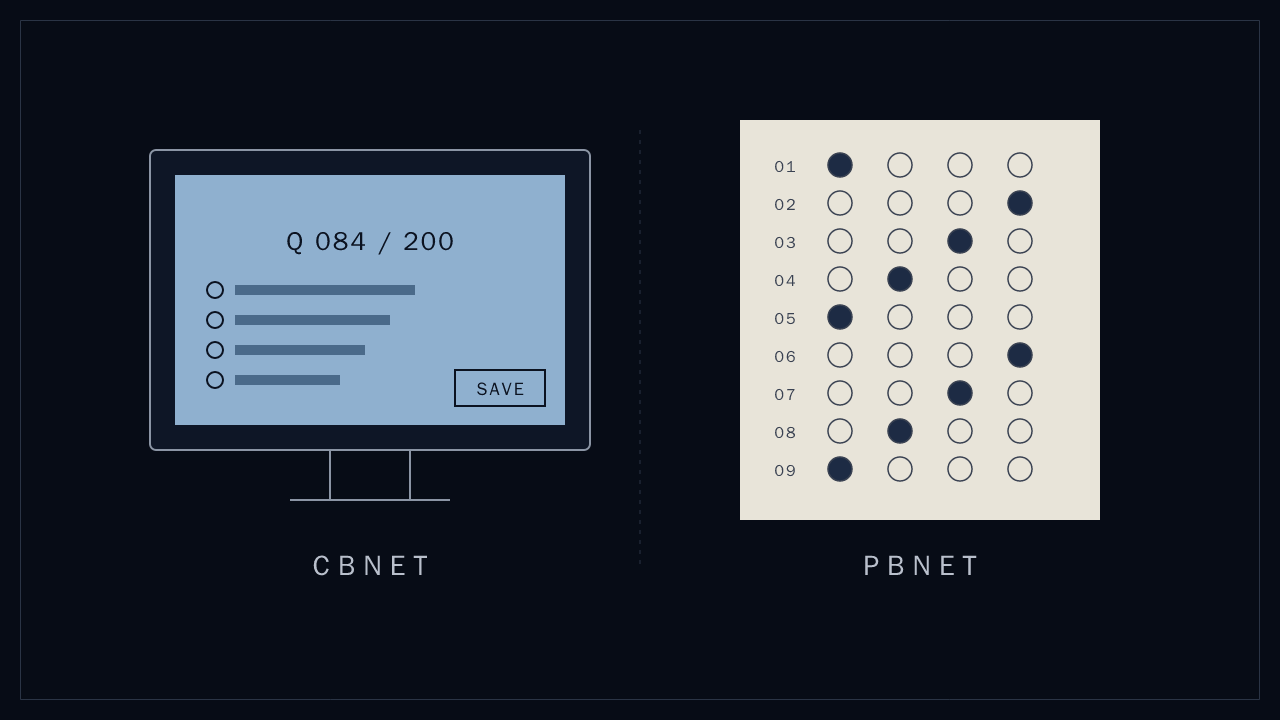
- CBNET means computer-based NET. PBNET means paper-based NET.
- Standard SSC/HSSC merit weights are NET 75%, HSSC 15% and SSC 10%.
Source: NUST admissions sources recorded in SailToNUST's NET facts, reviewed November 2026; underlying fact record verified August 2026
Which NET paper do you take?
Start with the programme and academic qualification, rather than the subject you prefer. Engineering and Computing use NET-Engineering. Other degree routes can depend on the qualification you hold. The paper-selection guide explains those cases.
| Paper | Subject weights |
|---|---|
| Engineering | Mathematics 50%, Physics 30%, English 20% |
| Applied Sciences | Biology 50%, Chemistry 30%, English 20% |
| Business and Social Sciences | Quantitative Mathematics 50%, English 50% |
| Architecture | Design Aptitude 50%, Mathematics 30%, English 20% |
| Natural Sciences | Mathematics 50%, English 50% |
NUST publishes these as percentages on its subject-weightings page. A question split calculated from the 200-question total is derived, rather than a separate published allocation. For Engineering, that derived split is 100 Mathematics, 60 Physics and 40 English questions.
Read the syllabus after identifying the paper. An old Engineering practice book may contain subjects outside the current Engineering mix. You can still study those concepts for another purpose, but they should not displace the subjects your NET paper tests.
CBNET and PBNET: same subject plan, different answer method
CBNET runs on a computer. The NET facts recorded on this site list Islamabad and Quetta as computer-based locations. Karachi and Gilgit use PBNET, where candidates record answers on paper. Centre availability varies by series, so check the dates page before arranging travel.
For CBNET, learn the controls before test day. Selecting an option and saving an answer are different actions. The client uses SAVE, Next, Prev, First and Last, rather than a question grid. Review also depends on a saved answer. One clock covers the whole paper.
For PBNET, practise transferring answers to a separate answer sheet within the test time. Getting the question right on rough paper does not help if you record the wrong question number. The CBNET versus PBNET guide explains the practical differences.
NUST also provides an official sample test for interface familiarisation. Independent preparation websites are separate from NUST. Our tools do not imply university endorsement.
What are NET series?
A series is a round of NET sittings within the admission cycle. NUST runs four each year. A series can contain several test dates; it is not one national exam hour shared by every candidate.
You can sit more than one series, with a separate application and fee for each. NUST uses your best score across series for merit. Read how repeat attempts work before planning an early attempt and a later retest.
Do not assume that last year's calendar repeats. The official dates page publishes the cycle's schedule. Use the registration guide for the application steps and check your admit card for your own sitting.
How does NET scoring affect admission?
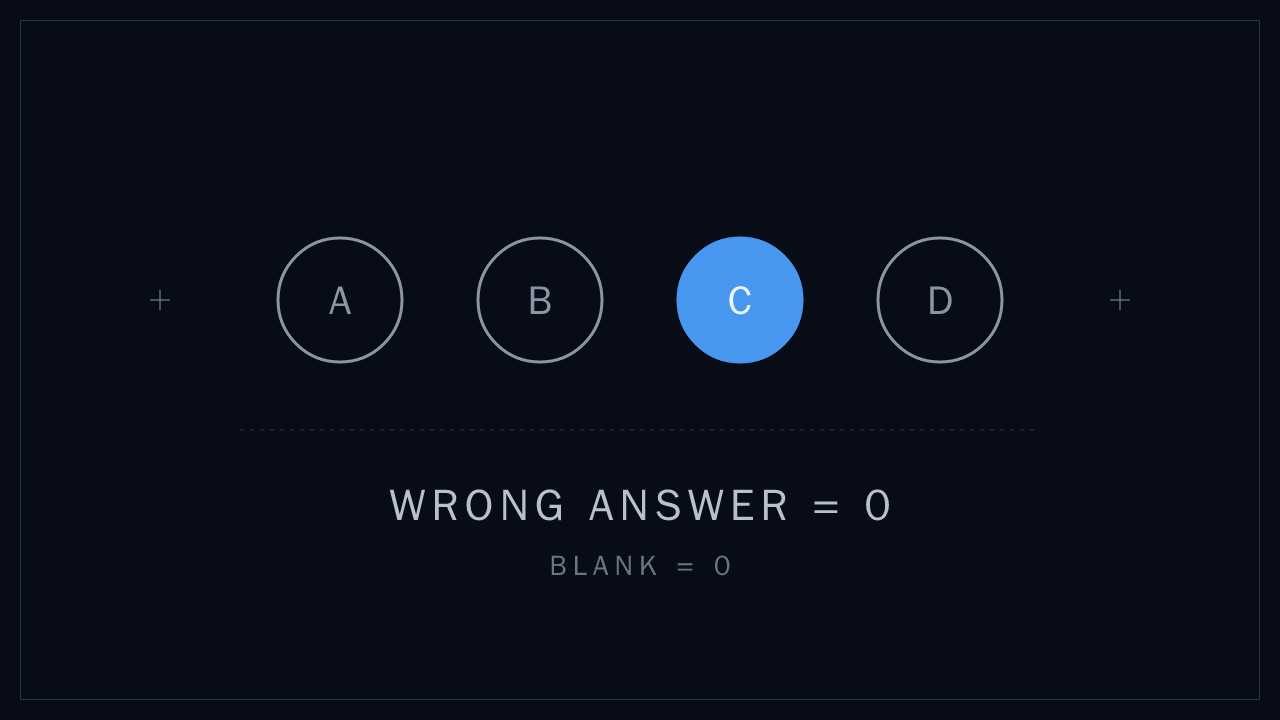
NET has no negative marking. A wrong answer does not subtract marks, so leaving a question blank offers no scoring advantage. Read the negative-marking explanation for how to handle uncertain answers without abandoning the rest of the paper.
For the standard SSC/HSSC route, the merit formula weights NET at 75%, HSSC at 15% and SSC at 10%. Calculate each result as a percentage before applying its weight. NET raw marks are out of 200; the raw number is not itself the NET percentage.
The aggregate calculator handles the arithmetic. The merit formula guide explains the academic-result cases, including equivalence routes. Your aggregate and a previous year's closing merit can guide planning, but they do not guarantee selection. NUST applies eligibility and programme requirements through its admission process.
How should a beginner start preparing?
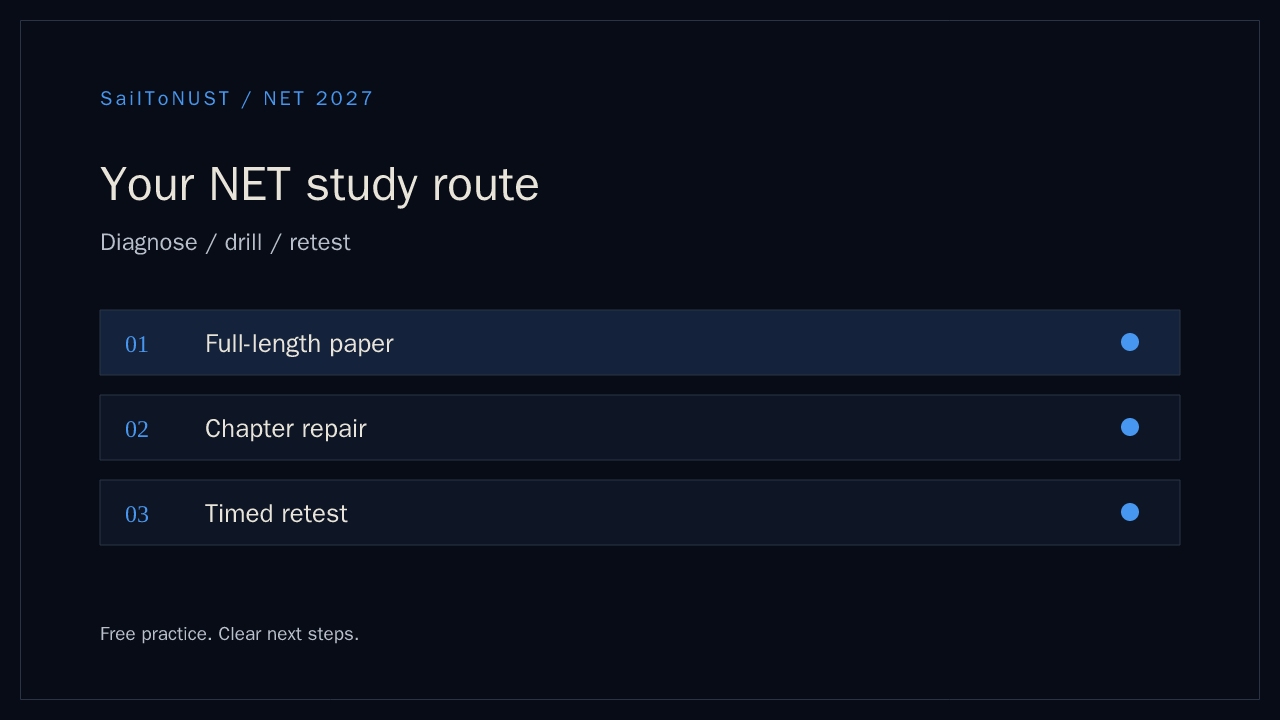
Confirm your paper, then attempt work that matches it. Engineering candidates can take a free full-length paper on SailToNUST to diagnose gaps. Business and Applied Sciences applicants should use relevant chapter practice and add a matching full mock from a provider that offers their paper.
Review the first attempt before taking another. Use chapter drills to repair the concepts behind wrong answers, then practise those methods on unfamiliar questions. Add past MCQs as candidate recalls, not official released papers. Finish with timed work and an interface rehearsal.
The NET preparation guide turns that sequence into a repeatable routine. You do not need to buy a course before finding out whether your current difficulty is knowledge, timing or the test controls.