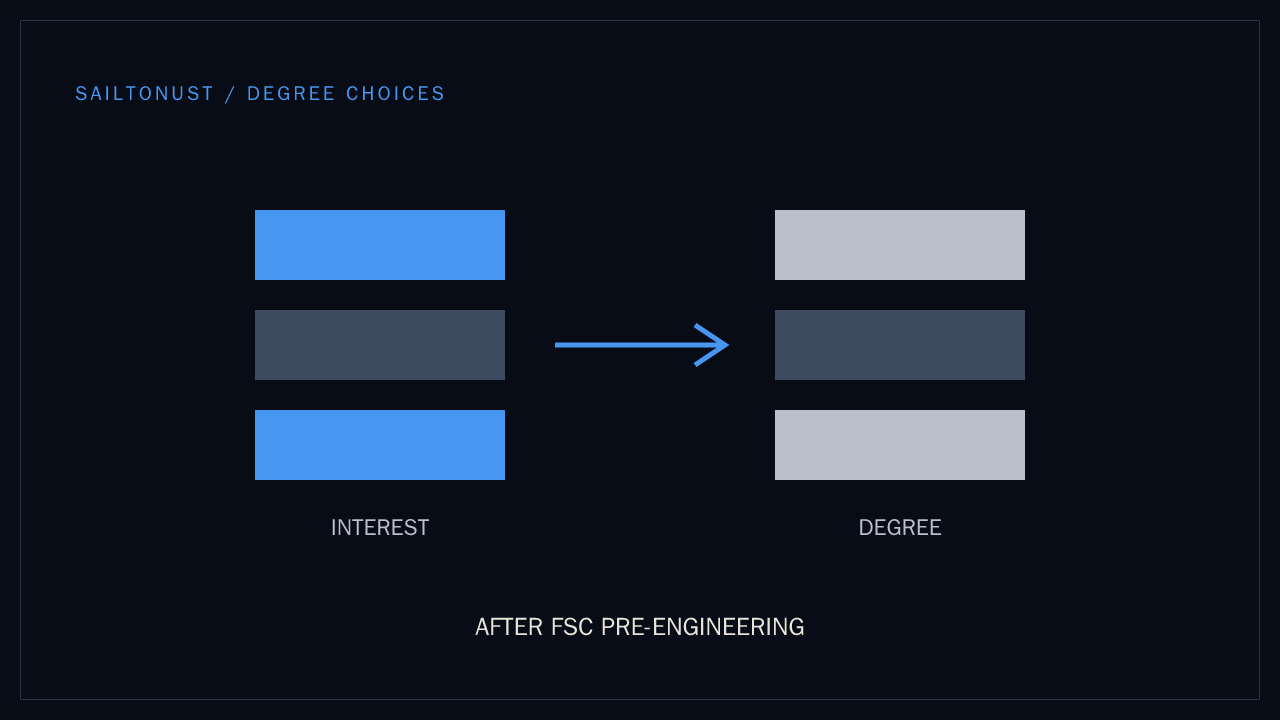
The best field after FSc Pre-Engineering is the one whose required study and likely work fit your interests, finances and eligibility. At NUST, start with a shortlist of actual programmes, compare their compulsory courses and prepare the NET paper each route requires.
Key facts
- FSc Pre-Engineering does not force you to choose a traditional engineering branch.
- NUST engineering and computing choices use NET-Engineering.
- Architecture and business routes have different NET patterns.
- No degree in this guide carries a guaranteed salary or admission outcome.
Source: NUST undergraduate programme list and NET weightings; SailToNUST net-facts register; checked November 2026
Choose a type of work before a degree label
List the tasks you enjoy enough to repeat when they become difficult. Solving an equation, debugging code, drawing a spatial arrangement and explaining a financial decision are different activities. Good marks may let you consider several degrees, but they do not tell you which work you want.
Try a small task from each serious option. Build a simple programme, examine a mechanical design exercise or analyse an economic question. The point is to test interest, not to master a profession before applying. Write down what confused you and whether you wanted to keep investigating.
Then read the compulsory courses. A fashionable elective cannot compensate for several semesters of required study you do not want. Ask the department which published scheme applies to your intake and how students choose later options.
Map your interests to NUST choices
The NUST undergraduate list is the starting source for available programmes as of November 2026. Use the application portal and eligibility rules to confirm the exact choices open to you.
| Interest to test | NUST programmes to investigate | NET route to prepare |
|---|---|---|
| Software and computation | Computer Science, Software Engineering | Engineering |
| Electronics and digital systems | Electrical Engineering, Computer Engineering | Engineering |
| Machines and physical design | Mechanical Engineering, Mechatronics Engineering | Engineering |
| Construction and structures | Civil Engineering | Engineering |
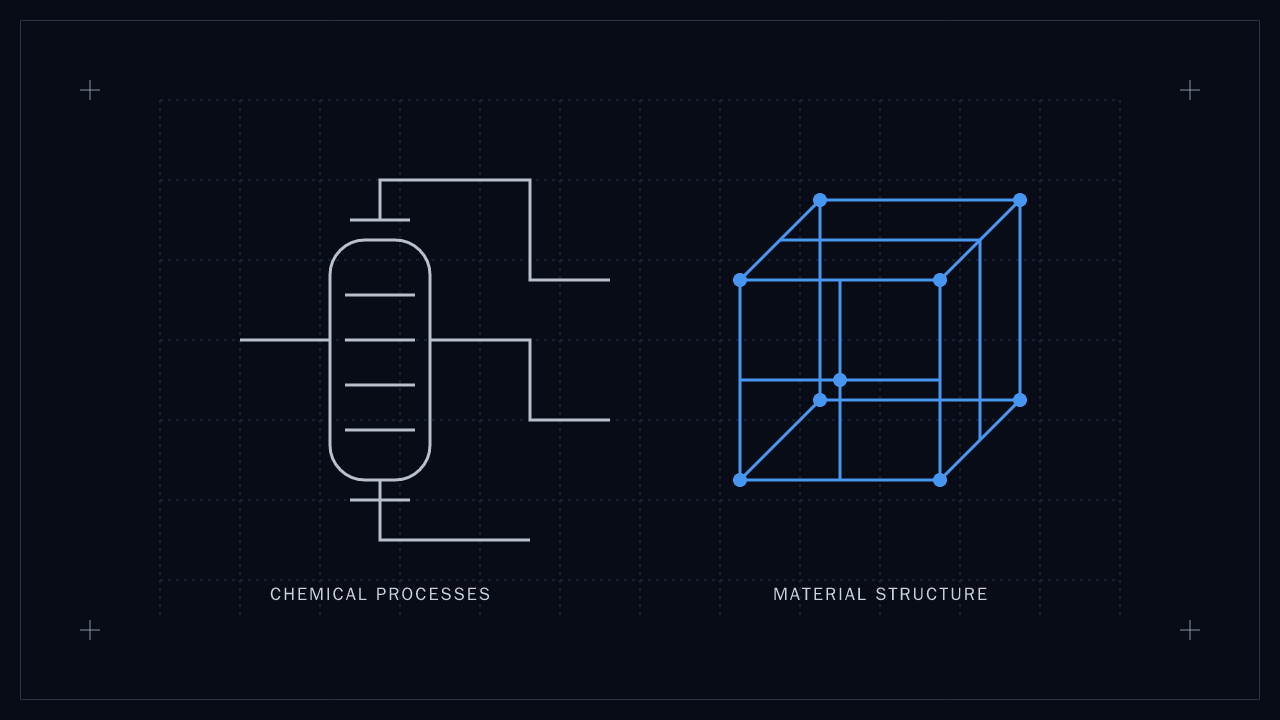
| Processes and materials | Chemical Engineering, Metallurgy and Materials Engineering | Engineering |
| Spatial and product design | Architecture, Industrial Design | Architecture |
| Organisations and economic decisions | BBA, Economics, Accounting and Finance | Business and Social Sciences |
This is a shortlist tool, not a complete eligibility table or employment ranking. Read the Electrical Engineering, Mechanical Engineering and Chemical Engineering guides when those options interest you.
Do not treat computing as one interchangeable choice
CS, Software Engineering and Computer Engineering overlap, but you should compare their required work. If you want to choose between the first two, read the dedicated NUST SE versus CS post. If electronics interests you, use the CS versus Computer Engineering guide.
For security-focused study, investigate the Software Engineering versus Information Security comparison. Search NUST's exact degree title and campus before assuming a programme with a familiar internet label exists there.
Do not move every computing degree above every other option because someone shared a salary screenshot. This guide has no verified evidence for that ranking. A degree should fit the subjects you will study as well as the work you hope to reach.
Check campus and cost before ordering preferences
A programme preference also selects a place to study. Consult the campus guide, calculate travel and living costs, and check the current fee information. Do not assume every degree runs at H-12.
Make a short comparison sheet for each acceptable programme. Record the campus, compulsory subjects, official eligibility page and cost source. Leave a question blank when you have not verified it. Ask the relevant admissions office rather than filling it with a group-chat claim.
Put choices you would actually accept on your list. A field you dislike does not become suitable because someone calls it a safe backup. Likewise, a high-demand label does not establish that you can afford the programme or meet its subject requirements.
Keep the admission paper separate from the career choice
NET-Engineering uses Mathematics 50%, Physics 30% and English 20%. NET-Architecture uses Design Aptitude 50%, Mathematics 30% and English 20%. NET-Business and Social Sciences uses Quantitative Mathematics and English at 50% each. These patterns come from the site's verified NET facts and the official weightings page.
Changing your shortlist can therefore change your preparation. Architecture needs design-aptitude work; a business route does not follow the Engineering Physics plan. Read which NET paper to take before registering, then check the programme's current eligibility independently.
You do not need to settle every career question before studying. You do need to know which paper supports your serious options. Keep a dated shortlist and revise it when you find new evidence about the courses, campus or costs.
How to prepare for your shortlisted programme's NET paper on SailToNUST
For engineering and computing, open the syllabus and attempt a SailToNUST full paper. Review errors by chapter, repair weak topics in practice, then use the simulator to rehearse the controls. Track what you corrected between papers instead of collecting scores without review.
For a business or architecture choice, use the relevant subject checklist and programme guide. A full Engineering mock does not cover a different paper's complete syllabus. Check the test dates once you know the route, and keep official programme eligibility beside your study plan.