NUST offers Chemical Engineering and Metallurgy and Materials Engineering at SCME, Islamabad, according to its official undergraduate programme list as of November 2026. Both use NET-Engineering: Mathematics 50%, Physics 30% and English 20%. Choose between them by comparing process engineering with the study and manufacture of materials.
Key facts
- Both degrees: School of Chemical and Materials Engineering, H-12, Islamabad.
- Engineering paper: Mathematics 50%, Physics 30%, English 20%.
- Minimum academic marks: 60% each in SSC and HSSC or equivalent, with the required subjects.
- Chemistry is part of the degree preparation, but it is not a section of NET-Engineering.
Source: NUST undergraduate programme list, SCME academic programmes and contact directory, NUST eligibility and NET weightings; checked November 2026
2026 closing merit positions
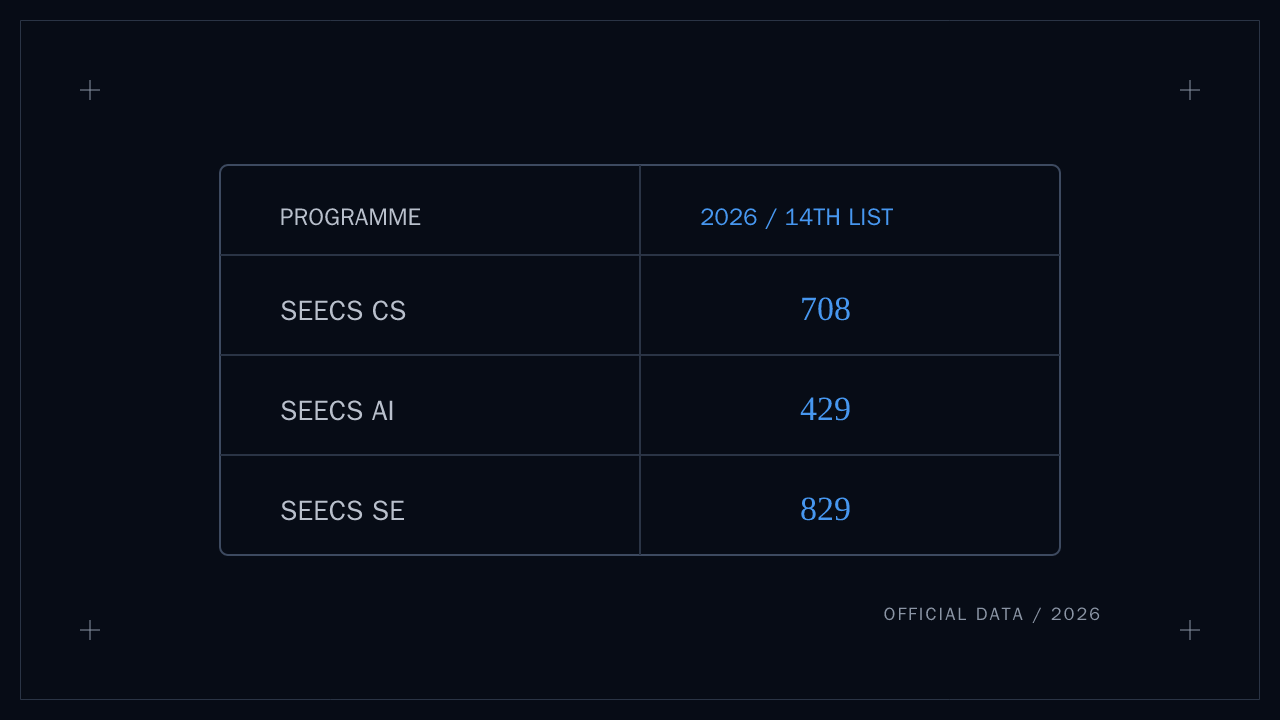
BE Chemical Engineering at SCME (C625) closed at merit position 4157 on the 14th merit selection list for UG 2026.
Source: NUST Admissions Directorate, 14th merit selection list, UG 2026. These are ranks within the relevant merit pool, not marks or aggregate percentages. See all NUST closing merit 2026 positions for the full record and guidance on preferences.
Where you would study
The NUST undergraduate programme list names SCME for both programmes. It does not list another NUST school for either degree. SCME's contact directory places the school on the H-12 campus in Islamabad.
| Programme | School and campus | What you are choosing |
|---|---|---|
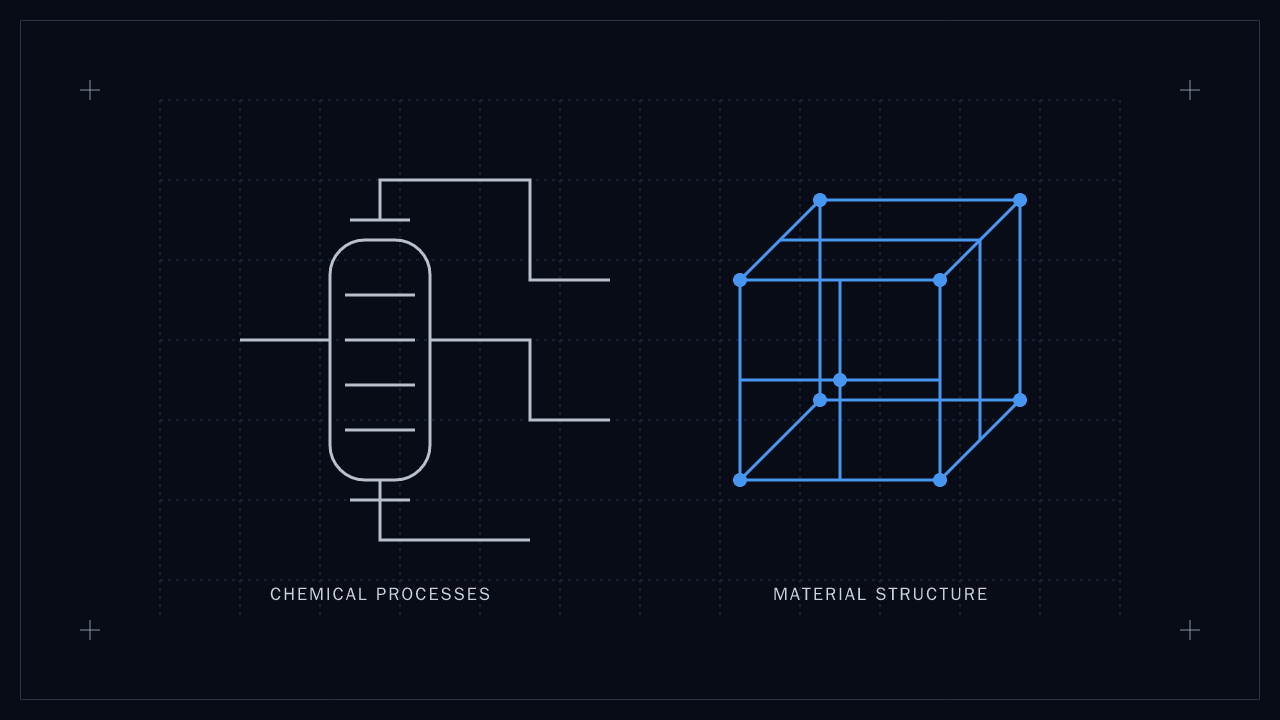
| Chemical Engineering | SCME, H-12, Islamabad | Engineering processes that transform and separate matter |
| Metallurgy and Materials Engineering | SCME, H-12, Islamabad | How processing changes a material's structure and properties |
These are separate degree choices within one school. Sharing a campus does not make the curricula interchangeable. Read the campus guide and fee guide when planning accommodation and costs.
How chemical and materials engineering differ
SCME's academic programmes page lists both bachelor's degrees and separate curricula by intake. It includes Fall 2025 onward entries. The examples below come from accessible older official outlines, so use them to understand the fields. Confirm the scheme for your own intake with SCME.
For the materials degree on its own, read the Metallurgy and Materials Engineering guide.
The Chemical Engineering Fall 2024 outline includes fluid mechanics, heat transfer, mass transfer, chemical reaction engineering, separation processes and process control. Those subjects connect chemistry to the calculations and equipment needed to run a process. Plant design and process safety also appear in that outline.
SCME's published Metallurgy and Materials curriculum includes metals and alloys, polymer engineering, ceramics and glasses, composite materials, heat treatment, corrosion and materials testing. Its older schemes explain a broader field than metals alone. Do not treat that PDF as a confirmed current semester plan.
| Question you want to investigate | Degree to examine first |
|---|---|
| How do we separate a mixture and control energy use in a process? | Chemical Engineering |
| Why did an alloy crack, and how could heat treatment change its behaviour? | Metallurgy and Materials Engineering |
| How should a reaction and its downstream separation work together? | Chemical Engineering |
| Which material should a component use, and how should we test it? | Metallurgy and Materials Engineering |
These are decision examples drawn from the subject areas, not promises about job titles. Both fields involve calculations and laboratory work. Liking school Chemistry helps you start the comparison, but it does not settle it.
Which NET paper should you prepare?
Both degrees fall under engineering. The official NET weightings match the site's shared NET facts: Mathematics 50%, Physics 30% and English 20%.
The paper has 200 MCQs and a 180-minute duration. Do not choose a Chemistry-heavy preparation plan because the degree title says Chemical Engineering. Prepare Mathematics across the NET syllabus, then use whole-paper practice to check whether you leave enough time for Physics and English.
For the standard SSC/HSSC route, the merit weights are NET 75%, HSSC 15% and SSC 10%. Those come from the NUST merit criteria. Use the aggregate calculator for your own academic record, including the separate A-Level final-year case.
Check eligibility before ranking either degree
NUST's undergraduate eligibility page requires at least 60% each in SSC and HSSC or equivalent. Engineering applicants need SSC Science and an accepted HSSC group.
| Academic background | Engineering condition |
|---|---|
| FSc Pre-Engineering | Meets the listed subject route |
| ICS with Mathematics, Physics and Computer Science | Clear Chemistry as a remedial course in the first semester after admission |
| FSc Pre-Medical with additional Maths | Meets the listed subject route |
| FSc Pre-Medical without additional Maths | Clear NUST's eight-week condensed Mathematics course before admission |
| O/A Levels or another foreign qualification | Obtain IBCC equivalence in an accepted group with the required marks |
NUST's ICS eligibility answer explicitly covers all engineering programmes. The Chemical Engineering title does not create a separate exclusion for the specified ICS combination.
DAE applicants should check the diploma-specific eligibility table linked from NUST's eligibility page. Eligibility for selected engineering programmes does not mean every diploma qualifies for both SCME degrees.
Related degrees to compare
NUST's programme list also names BS Chemistry at SNS, Environmental Engineering at SCEE and Energy Engineering at USPCAS-E. Mechanical Engineering is another comparison if your interest centres on equipment and manufacturing; see the mechanical engineering guide.
Compare BS Chemistry if chemistry itself interests you more than designing industrial processes. Compare Environmental or Energy Engineering if those problems motivate your degree choice. These are suggestions for reading curricula, not claims that the degrees lead to identical work. Check each programme's eligibility and paper route separately.
How to rank your preferences
Rank Chemical Engineering higher if reaction systems, process calculations and separation equipment attract you. Rank Metallurgy and Materials higher if you want to investigate alloys, polymers, failure and material selection. Neither degree wins simply because it shares your favourite school subject's name.
Before submitting preferences, read a later-year course from each outline. Write down the work you would want to do in its lab or design project. If you dislike the compulsory subjects, do not let a hoped-for elective decide your ranking.
List a backup only if you would accept studying it. Read the selection-list guide before making application decisions. This guide gives no closing aggregate, salary estimate or placement percentage because the sources checked do not establish those figures for these programmes.
How to prepare for this programme's NET paper on SailToNUST
Check your paper in the NET syllabus, then use the aggregate calculator to set a practice target from your own marks. Match practice to that paper. Engineering applicants can use a timed full paper; other categories should use the relevant subject drills and prepare any category-specific material separately.