SCEE is NUST's School of Civil and Environmental Engineering at H-12, Islamabad, containing NICE, IESE and IGIS. As of November 2026, its undergraduate choices cover Civil, Environmental and Geoinformatics Engineering plus Environmental Science; Energy Engineering belongs to the separate USPCAS-E centre.
Read the NUST campuses guide first for the wider school and city list. SCEE's institute abbreviations describe parts of one school, so NICE is not another city campus.
SCEE at a glance
- SCEE contains NICE, IESE and IGIS.
- The school is on the H-12 campus in Islamabad.
- Engineering choices use NET-Engineering.
- BS Environmental Science uses NET-Applied Sciences.
- USPCAS-E is separate from SCEE.
Source: SCEE, IESE and IGIS official pages; NUST undergraduate list; USPCAS-E official pages; checked November 2026
2026 closing merit positions
| Programme | Institute | Code | 2026 closing position |
|---|---|---|---|
| BE Civil Engineering | NICE | I601 | 4526 |
| BE Geoinformatics | IGIS | G636 | 4579 |
| BE Environmental Engineering | IESE | E609 | 6013 |
| BE Energy Engineering (new in 2026) | USPCAS-E | U6007 | 5035 |
| BS Environmental Sciences | IESE | E634 | 880 |
Source: NUST Admissions Directorate, 14th merit selection list, UG 2026. These are ranks within the relevant merit pool, not marks or aggregate percentages. See all NUST closing merit 2026 positions for the full record and guidance on preferences.
Which institute teaches which subject?
The SCEE introduction names its institutes and dates the school's establishment to November 2008. The NUST undergraduate list identifies the degree choices.
| Institute | Full name | Undergraduate area |
|---|---|---|
| NICE | NUST Institute of Civil Engineering | Civil Engineering |
| IESE | Institute of Environmental Sciences and Engineering | Environmental Engineering and Environmental Science |
| IGIS | Institute of Geographical Information Systems | Geoinformatics Engineering |
NUST pages vary the expansion of IESE slightly. The useful distinction is the programme: Environmental Engineering and Environmental Science are separate choices. Check the exact degree title in the portal rather than relying on the institute abbreviation alone.
SCEE also conducts postgraduate work. Do not interpret an MS research specialisation as an undergraduate preference. Open the curriculum for your intended entry year when assessing course content.
NICE and civil engineering
NICE is the civil engineering institute within SCEE. Its official pages name a Structures Lab and a Mechanics Lab. These provide concrete starting points for questions about structural testing and the study of material behaviour.
Read the Civil Engineering guide for the degree itself. For school choice, compare SCEE at Islamabad with MCE in Risalpur and NBC in Quetta, which also appear beside Civil Engineering on NUST's undergraduate list.
The shared degree name does not settle your living arrangements or daily routine. Read the relevant college's joining notice and curriculum before ranking it.
IESE and environmental study
The IESE programme page lists undergraduate Environmental Engineering and Environmental Science alongside postgraduate degrees. Engineering and Science differ in their degree requirements and NET paper, so do not treat one as a spare spelling of the other.
IESE's teaching and research lab list names the Air and Noise Laboratory, Environmental Biotechnology Lab, Water and Wastewater Lab, Environmental Chemistry Teaching Lab and Membrane Bioreactor Laboratory. These names show the areas applicants can investigate without assuming a particular research placement.
Compare the compulsory subjects in the two environmental curricula. If both interest you, confirm your eligibility and test category for each before registration. A preference list cannot fix a paper choice that fails to cover the programme you want.
IGIS and geoinformatics
IGIS teaches the geoinformatics branch of SCEE. Its academic and research lab page names GIS and Remote Sensing teaching labs, plus Photogrammetry and Geo Visual Analytics research facilities.
The GIS lab page names ArcGIS Pro, QGIS and other geospatial software. That is a more useful description of the setting than assuming geoinformatics is a general computing degree. Read the published curriculum to see how spatial data, mapping and engineering connect.
If you are comparing IGIS with SEECS, compare the degree content first. Interest in software alone does not tell you whether you want a geospatial engineering curriculum or a general computing programme.
USPCAS-E and energy engineering
USPCAS-E is the U.S.-Pakistan Center for Advanced Studies in Energy. NUST's undergraduate list assigns Energy Engineering to this centre, rather than to SCEE. Keep it as a separate preference when comparing H-12 options.
The centre's official site includes BE Energy in its undergraduate menu. Its history page names Solar Energy Research, Smart Grid and Power Research, Energy Storage and Conservation Research, and Thermal Engineering Research laboratories.
Some introductory text on the centre's home page still describes undergraduate study as forthcoming. As of November 2026, use the central undergraduate list and your application portal to establish the admission option. Ask the centre for the current curriculum rather than inferring it from older postgraduate descriptions.
Which NET paper applies?
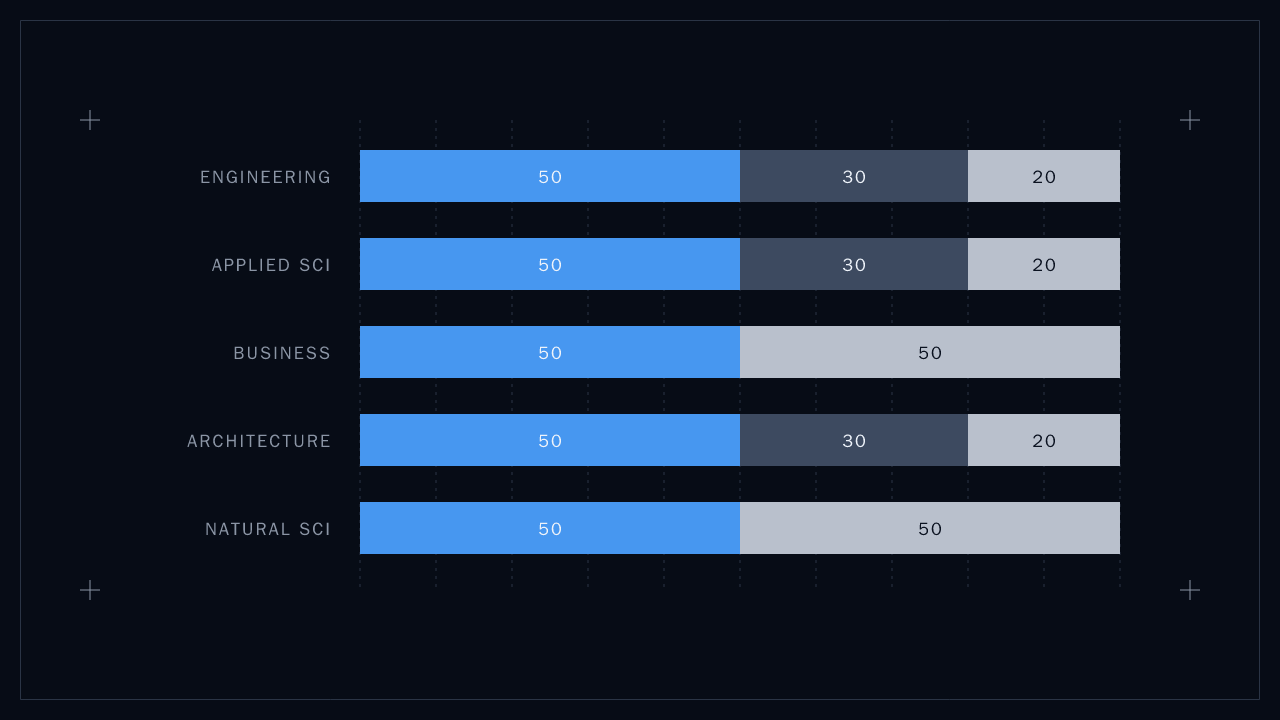
Civil, Environmental, Geoinformatics and Energy Engineering use NET-Engineering: Mathematics 50%, Physics 30% and English 20%. BS Environmental Science uses NET-Applied Sciences: Biology 50%, Chemistry 30% and English 20%.
Both papers have 200 MCQs in 180 minutes, with no negative marking. Read the paper choice guide and eligibility guide for your background. The word Environmental does not determine the paper by itself.
How to prepare for these programmes' NET papers on SailToNUST
For the engineering choices, start with the syllabus and a timed full paper. Repair weak Mathematics and Physics chapters before the next sitting. Use the simulator for answer-saving and navigation practice.
For BS Environmental Science, follow the Applied Sciences syllabus instead. Use the Biology guide, Chemistry guide and relevant chapter practice. SailToNUST's Engineering full papers do not replace a Biology and Chemistry paper.