Six months is enough to prepare for NET while you finish FSc part 2, if you treat the board exams as part of the plan. Spend four months revising part 1 chapters and learning part 2 ones alongside college, pause NET almost completely for your boards, then use the final month for full papers before Series-4.
Key facts
- NET-2027 runs in four series. Each series needs its own registration form and its own Rs. 5,000 fee
- Series-4 CBNET in Islamabad is listed as Jun to Jul 2027 (tentative)
- NUST picks your best NET score for merit if you sit more than once
- If your part 2 result is not out, NUST uses your FSc part 1 marks for merit
- You still need 60% in the complete FSc result when you join
Source: NUST dates to remember and FAQ pages, checked October 2026
Why the board exams belong inside the plan
The common mistake is to treat FSc part 2 as a distraction from NET. It is not, for two reasons.
First, NUST checks your complete FSc result at joining. Its FAQ says merit can be generated on part 1 marks, but you must have 60% or more in the complete result when you join. NUST also says candidates sitting the 2nd annual (supplementary) exams are not eligible for the current session. Fail one board paper and this year's admission is gone, whatever your NET score.
Second, the part 2 syllabus is NET syllabus. NUST's FAQ says NET is based on SSC and HSSC level studies, part 1 and part 2, and that textbooks are consulted when the question bank is written. Every hour you spend on Integration for your board exam is an hour of NET Mathematics.
So the plan below counts college hours as NET hours wherever the syllabus overlaps.
The shape of the six months
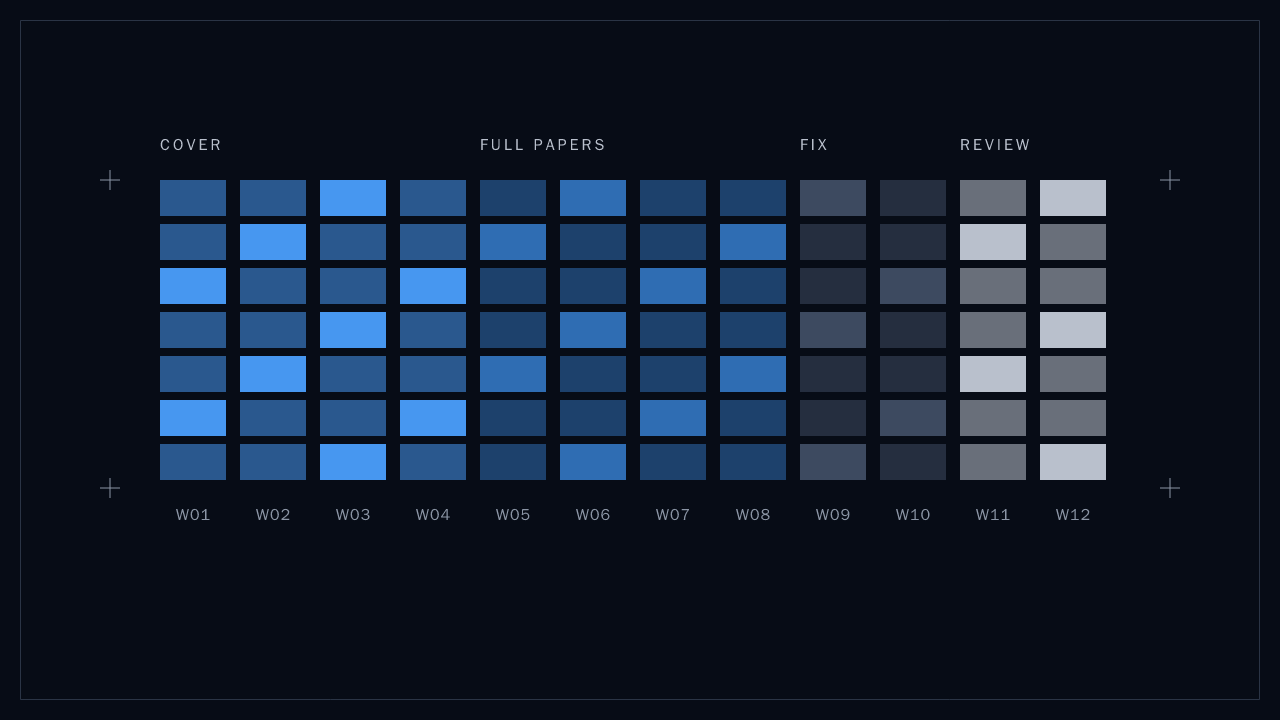
Your board's date sheet decides where month 5 falls. Count back from it. The table assumes the boards land in month 5 and Series-4 comes after them, which matches the NET-2026 pattern: Series-4 testing in Islamabad started on 13 June 2026.
| Month | Phase | NET hours per week | Full papers |
|---|---|---|---|
| 1 | Revise part 1 core | 12 to 14 | none |
| 2 | Finish part 1 revision | 12 to 14 | 1 diagnostic |
| 3 | Part 2 chapters as college teaches them | 10 to 12 | 1 every 2 weeks |
| 4 | Part 2 plus weak chapters | 10 to 12 | 1 a week |
| 5 | Board exams | 2 to 3 (English only) | none |
| 6 | Sprint to Series-4 | 30 or more | 2 a week |
Twelve hours a week is about 1.5 hours on college days and 3 to 4 hours on Sunday. That is realistic with classes. Thirty hours in month 6 is realistic because college is over.
Months 1 and 2: get part 1 back
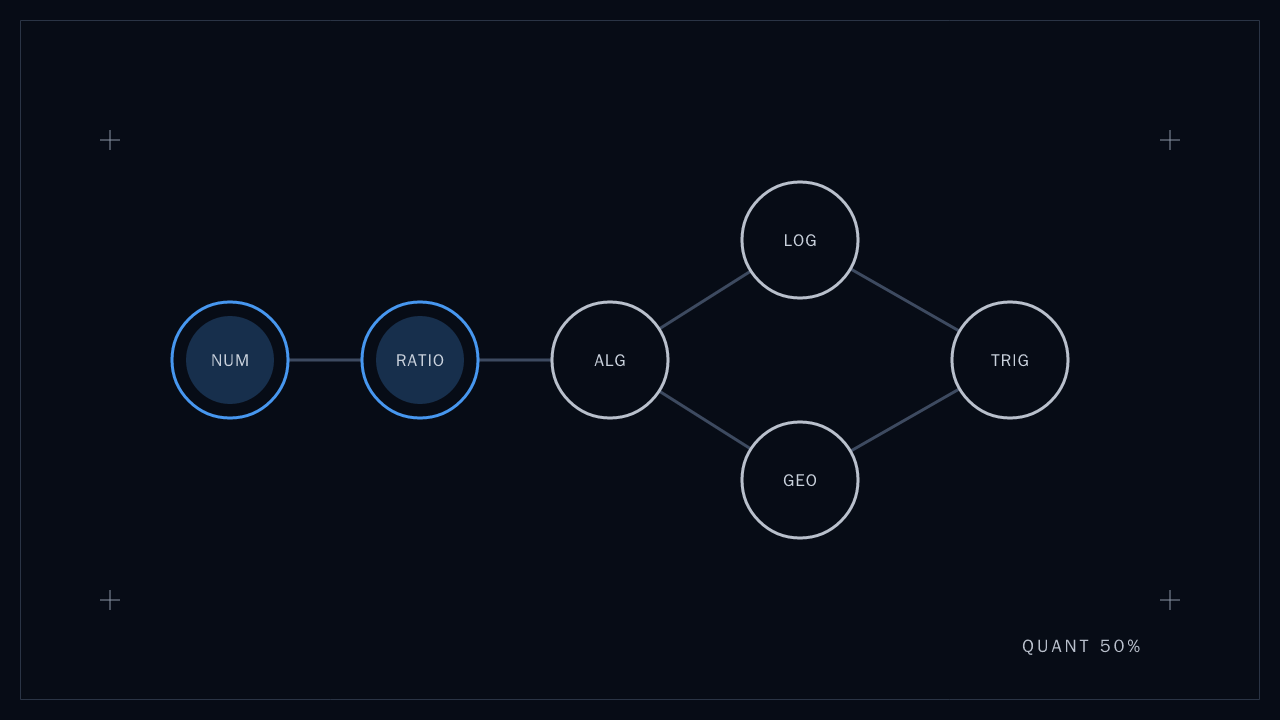
You studied these chapters a year ago and have forgotten more than you think. NET-Engineering is 50% Mathematics, 30% Physics and 20% English, so split your hours the same way.
| Weeks | Mathematics | Physics | English |
|---|---|---|---|
| 1 to 2 | Functions and Graphs, Theory of Quadratic Functions | Measurements, Force and Motion | 15 words a day |
| 3 to 4 | Limit and Continuity, Differentiation | Work, Energy and Power, Circular and Rotational Motion | Analogies |
| 5 to 6 | Trigonometric Identities, Matrices and Determinants, Complex Numbers | Waves and Vibrations, Electrostatics and Current Electricity | Grammar and usage |
| 7 to 8 | Sequences and Series, Permutations and Combinations, Vectors in Space | Electromagnetism, Heat and Thermodynamics | Vocabulary review |
Close each chapter with 30 MCQs from that chapter in the practice library, timed at about a minute each. If you score under 20 of 30, the chapter stays open for another session.
At the end of month 2, sit one full-length paper under the full 180-minute clock. You have not covered part 2 yet, so the score will be low. Use it to see which part 1 chapters did not stick.
Months 3 and 4: let college do half the work
Your college is now teaching part 2. Study each chapter for the board exam and for NET in the same sitting: textbook exercises first, then 20 to 30 NET-style MCQs on it the same week. The part 2 chapters on the syllabus page include Further Differentiation, Integration, Differential Equations, Analytical Geometry and Conic Section in Mathematics, and Electrostatics, Alternating Current, Simple Harmonic Motion, Physical Optics and Quantum Physics in Physics. Your board's book may order them differently.
Use the NET hours this frees up for the part 1 chapters you skipped in months 1 and 2: Partial Fractions, Mathematical Inductions and Binomial Theorem, Solids and Fluid Dynamics, Physical Optics and Gravitational Waves, and Nuclear and Particle Physics.
From month 3, sit a full paper every second weekend, then every weekend in month 4. Group your wrong answers by chapter. The three chapters with the most wrong answers get the next week's extra hour.
Month 5: boards first, NET on hold
Stop NET work apart from 20 minutes of English a day. Vocabulary fades fastest, and it is the only NET section your board exams do not revise for you. Everything else you do this month, from Integration to Alternating Current, is NET preparation already.
Do not sit a NET series during your board exams. The best-score rule means a weak attempt costs you nothing on merit, but it costs you a day of board revision, and the board result decides whether you are eligible at all.
Month 6: the sprint
College is over and you have the whole day. Use it like this:
- Two full papers a week, on separate days, each reviewed the next morning.
- Mornings on the two or three chapters your papers keep exposing.
- One paper on the CBNET simulator before the test, if you are sitting in Islamabad or Quetta. The SAVE button and the missing question grid are easier to learn in practice than in the hall.
- Register for Series-4 as soon as the form opens. NUST lists Series-4 registration as Apr to May 2027 (tentative), which may close before your boards end.
If month 6 is shorter than four weeks because of the date sheet, cut the number of new chapters, not the full papers. The 3-month plan has a tighter version of this final phase.
Checking the plan is working
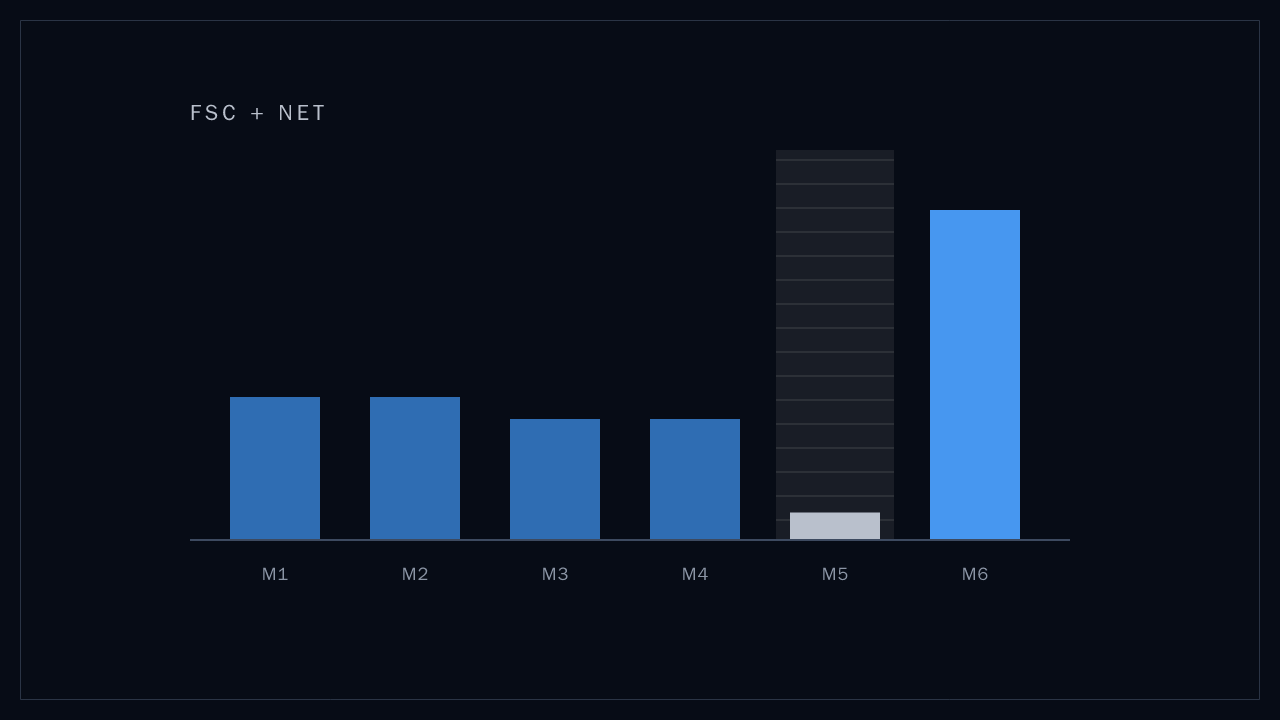
At the end of each month, put your latest full-paper score into the aggregate calculator with your matric and FSc part 1 marks. NET is 75% of the aggregate, so a 10-mark rise in NET adds 3.75 points. If your paper scores have not moved between month 3 and month 4, the problem is usually review: you are sitting papers but not reworking the questions you got wrong.
FAQ
Can I prepare for NET and FSc part 2 at the same time?
Yes. NET is based on FSc part 1 and part 2, so board preparation for part 2 chapters counts as NET preparation. The extra work is part 1 revision, English, and timed full papers.
Is 6 months enough for NET?
For most students, yes, if months 1 to 4 cover the syllabus and month 6 is spent on full papers. The weak point is month 5, when the boards take over, so finish your syllabus pass before it.
Should I sit NET before my FSc part 2 exams?
If a series falls in months 3 or 4, sitting it is a useful mock because NUST keeps your best score. Avoid any series that lands during the board exams themselves.
Do FSc part 2 marks count in NUST merit?
If your part 2 result is not out when merit is generated, NUST uses your part 1 marks. You must still show 60% or more in the complete FSc result when you join.