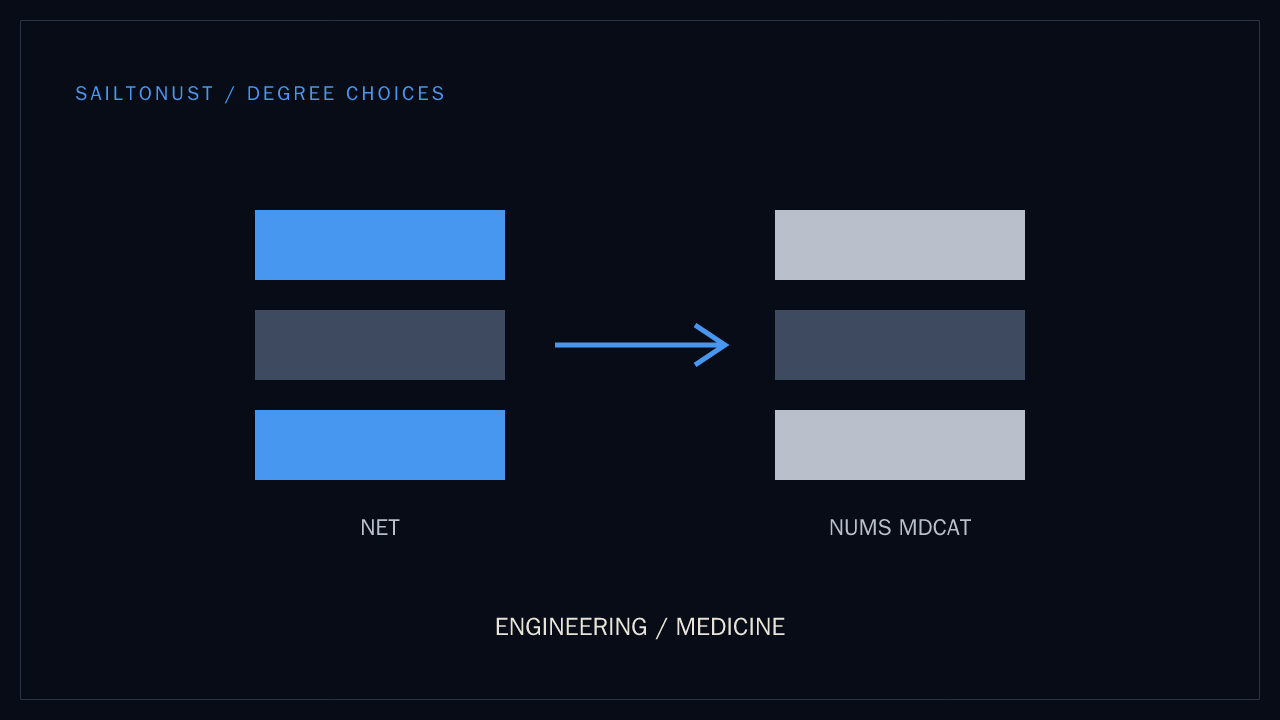
Choose engineering if you want to work on technical systems and designs; choose medicine if you want clinical study and patient care. At NUST, these are separate admission routes: engineering uses NET-Engineering, while MBBS at the NUST School of Health Sciences follows its medical admission policy and NUMS MDCAT requirements.
Key facts
- An engineering NET result is not an MBBS admission route.
- The NSHS open-merit policy requires the relevant pre-medical qualification and NUMS MDCAT.
- This guide makes no salary ranking between doctors and engineers.
Source: NUST School of Health Sciences eligibility policy; NUMS MDCAT 2026 notice; NUST engineering programme list; checked November 2026
Compare the daily responsibility
Start with the kind of problem you want to take responsibility for. Engineering study asks you to reason about technical systems, constraints and design choices. Medicine asks you to learn about health and work towards clinical responsibility for people. Enjoying Physics or Biology is useful evidence of interest, but it is not the whole decision.
Try to learn what the work looks like beyond entrance tests. Ask an engineer to describe a project review or site problem. Ask a medical student about the demands of clinical learning. Keep patient privacy intact and seek permitted observation rather than informal access to clinical activity.
For the medical side of that decision, Premeth offers an honest look at whether MBBS is worth it in Pakistan. Use its questions about training time and costs to prepare for conversations with medical students and your family.
| Decision question | Engineering route | Medical route |
|---|---|---|
| What work interests you? | Designing, analysing or building technical systems | Clinical learning and patient care |
| Which NUST route should you read? | The chosen engineering programme | MBBS at NSHS |
| What admission test should you investigate? | NET-Engineering | NUMS MDCAT under the current NSHS policy |
| What should you compare financially? | Programme fees, living costs and required equipment | The medical fee schedule and later training costs |
| What should you avoid assuming? | Every engineering branch has the same work | MBBS admission alone completes professional training |
Check your subject route before choosing a test
The NSHS eligibility policy states the current open-merit qualification and NUMS MDCAT requirement. As of November 2026, it names FSc Pre-Medical or equivalent with Biology, Chemistry and either Physics or Mathematics. Read the full policy for your category rather than treating the word equivalent as permission for any subject combination.
If you have FSc Pre-Engineering, do not assume that Mathematics substitutes for Biology in MBBS eligibility. Obtain confirmation through the published medical admissions process before changing your study plan. Appearing in an entry test and meeting the degree's admission requirements are separate questions.
If you have Pre-Medical and want an engineering or computing option, read the NUST guide for Pre-Medical and ICS students. Check current subject and remedial requirements for the actual programme. Do not apply a computing exception to every engineering discipline.
NUST MBBS does not use an applied-sciences NET shortcut
The NUMS MDCAT 2026 notice includes the NUST School of Health Sciences among the institutions covered by that admission test. It is a medical route separate from undergraduate NET categories.
NET-Applied Sciences is not an alternative MBBS test. A life-science degree is also a different qualification from MBBS. If your goal is clinical medicine, read the medical policy directly. If you want another science degree, judge that programme on its own learning outcomes.
For a later admission cycle, return to the new notices. A dated 2026 policy cannot guarantee next year's registration window, fee or test conditions. This guide does not carry forward a past date as a future deadline.
Compare costs and training without salary rumours
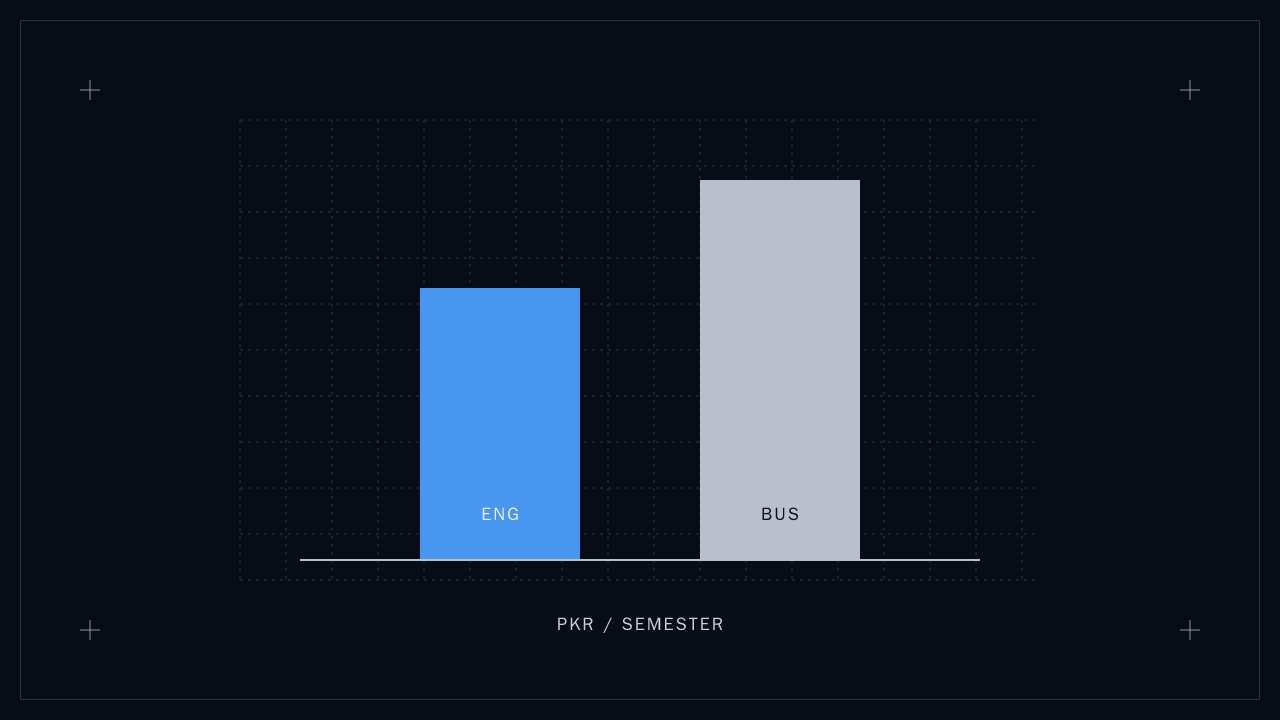
Ask your family to compare the full costs of each actual programme. Include accommodation, travel and study expenses, then check the institution's current fee schedule. The NUST fee guide can orient you, but the medical programme has its own published charges and policy.
For medicine, check the current professional registration and supervised-training rules with the responsible regulator before planning when you could practise. For engineering, check the specific programme and intake's accreditation status. University admission does not settle every later professional requirement.
This guide does not publish doctor-versus-engineer salary figures. A specialist doctor's income and a fresh engineering graduate's pay would be an uneven comparison. Ask for a dated survey that identifies career stage, sector and location before using money to break the tie.
Keep the final choice personal and concrete. Would you still want the required study if a relative stopped praising the profession? Which programme can you afford? Which work would you choose after seeing its routine tasks and responsibilities?
How to prepare for an engineering programme's NET paper on SailToNUST
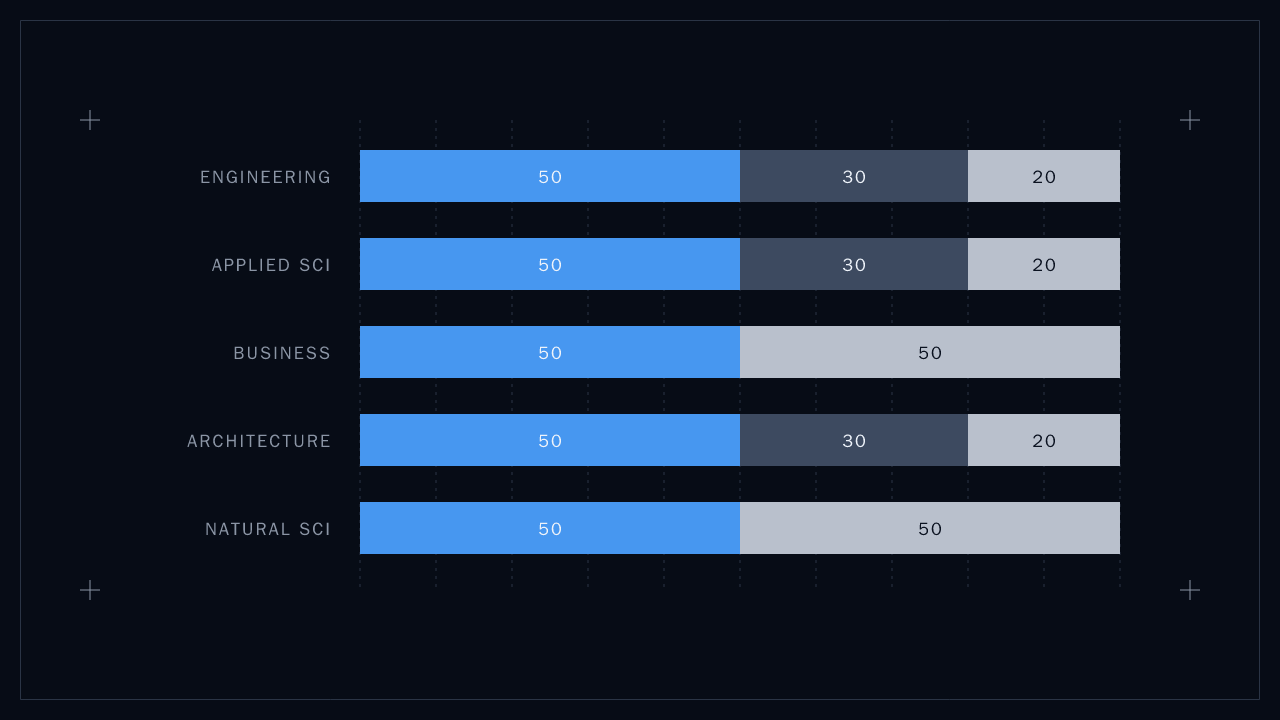
If engineering remains on your list, prepare NET-Engineering: Mathematics 50%, Physics 30% and English 20%. Read the paper selection guide, then take a baseline in full papers.
Repair the chapters behind your errors in practice. Use the aggregate calculator for NET-based engineering scenarios. Do not use that formula or score as an MBBS merit calculation. Keep your medical preparation tied to NUMS and NSHS instructions.